English

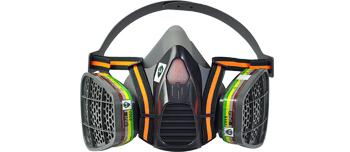
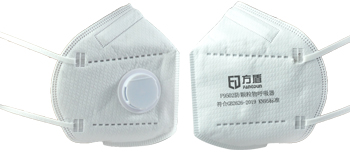
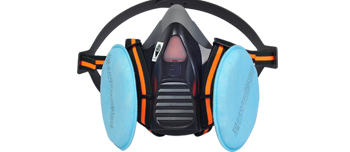
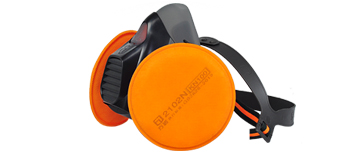
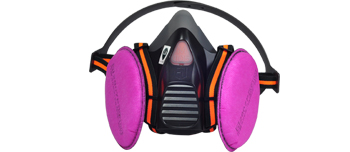
Dust is ubiquitous in industrial production, construction, and daily decoration. From fine silica dust to larger sawdust, these suspended particles, if inhaled for a long time, can cause irreversible damage to the lungs and even lead to serious occupational diseases such as pneumoconiosis. As a key equipment for respiratory protection, the Fangdun dustproof half mask has become a "personal guard" for many frontline workers due to its lightweight, comfortable, and efficient characteristics.
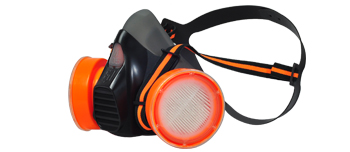
However, choosing the right one is only the first step, and wearing it correctly is the core to unleash its protective effectiveness. Selection is the cornerstone of protection. Faced with the dazzling array of products on the market, workers first need to clarify the nature of dust in the working environment. According to national standards, particulate matter respirators are mainly divided into two categories: KN and KP. If the work environment involves non oily particles generated by coal mines, cement, welding and polishing, KN series should be selected; If there are oily particles present in painting, asphalt paving, and other scenarios, the KP series must be selected.
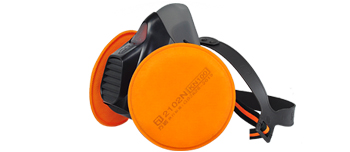
In addition, the filtration efficiency level (such as 90, 95, 100) directly determines the protective ability, and high-grade filter cotton should be prioritized for high-risk environments. The standardization of the wearing process is equally crucial. Many cases of protective failure are not due to inadequate mask performance, but rather due to leakage caused by improper wearing.
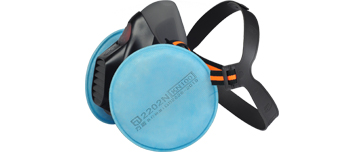
Before wearing, it is necessary to check whether the mask body has cracks, whether the headband elasticity is good, and whether the exhalation valve is flexible. When wearing, the mask should cover the mouth and nose. First, pull the headband above the head and place it high above the head. Then, pull the headband below and place it behind the neck to ensure that the headband does not cross. Subsequently, press the edge of the mask with both hands for a tightness check: take a deep breath. If the mask slightly collapses and there is no air leakage, it indicates good wearing; If you feel airflow entering from the edge, you need to readjust the headband tension or facial position.
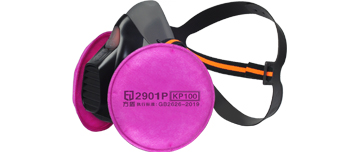
It is worth noting that the dust cover is not a "one-time solution". The filter cotton will become clogged with increasing usage time, leading to an increase in respiratory resistance. When the user feels difficulty breathing or when the surface of the filter cotton is visibly dirty or damaged, it must be replaced immediately. At the same time, the Fangdun mask body needs to be cleaned regularly, washed with warm water and neutral detergent, and dried to avoid direct sunlight that can cause rubber aging. Only through scientific selection, standardized wearing, and careful maintenance can this respiratory defense line truly be unbreakable.