English
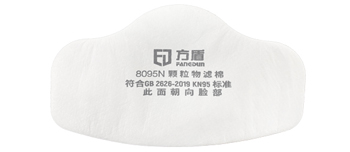
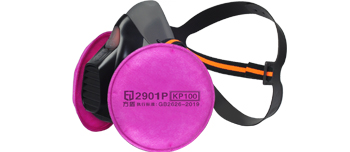
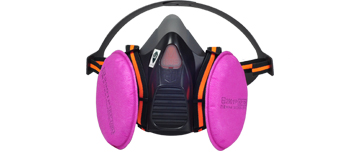
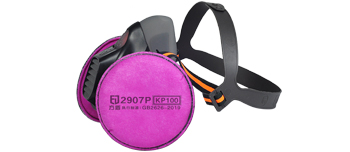
Fangdun 2901P and 2907P are two commonly used KP100 level dust filter cotton in the industrial protection field. The two maintain the same level of basic protection, with the core difference being the addition of an extra layer of activated carbon cloth to 2907P, which gives them different emphasis on functional positioning and applicable environments.
Same core: Both KP100 high-efficiency protection products meet the KP100 level requirements in the GB2626-2019 national standard. This means that regardless of which one is chosen, its filtration efficiency for both oily and non oily particles can reach over 99.97%. The filtering principle of both adopts a multi-layer structure combining electrostatic adsorption and physical obstruction. While ensuring efficient interception, the internal airflow channel is optimized to control the respiratory resistance within a lower range, thereby reducing the stuffiness during long-term wearing. Therefore, in terms of basic particulate matter protection capabilities, both provide the same level of safety assurance.
Key difference: The core design that distinguishes the two products with or without an activated carbon layer is that the 2907P is equipped with a melt blown activated carbon cloth weighing approximately 150 grams. This layer of carbon cloth does not participate in improving the filtration efficiency of particulate matter - as both are already at the highest level of efficiency - its function is to increase the adsorption capacity for gaseous pollutants such as organic vapors and odors. And 2901P does not contain this structure, its function focuses on the physical interception of particulate matter.
This difference directly determines the applicable scenarios of the two products. 2901P is suitable for environments where the main pollutants are dust or oily particles, such as ordinary dust workshops in metal polishing, building materials processing, coal mining, and machinery manufacturing industries. 2907P is more suitable for workplaces where dust and harmful gases coexist, such as the smoke and accompanying ozone generated during welding operations, organic compounds emitted from spraying workshops, irritating gases emitted from chemical areas, or trace chemical reagent odors encountered in laboratories. In these cases, the activated carbon layer of 2907P can play an auxiliary role in odor adsorption, making protection more in line with the complex requirements of practical operations.
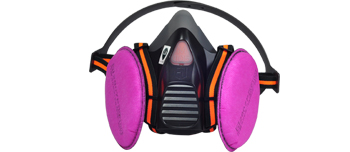
Overall, the selection of a product does not depend on the level of protection, but on the presence of harmful gases in the working environment. If the main pollutant is solid or liquid particles and there is no obvious odor, 2901P can meet daily protection needs; If there are both particulate matter and uncomfortable gaseous pollutants in the environment, 2907P is a more suitable choice. It is worth noting that the activated carbon layer has a certain degree of adsorption saturation. When an odor is smelled, the filter cotton should be replaced in a timely manner to ensure the protective effect.
The two products belong to the same series, with interchangeable parameters and clear differences. Users only need to make reasonable choices based on the on-site air composition, combined with their sensitivity to odors and working hours. In the selection of protective equipment, matching actual risks and following the correct usage cycle are the key to ensuring health.