English
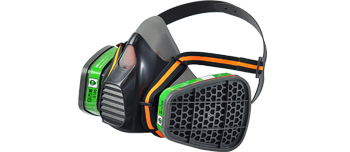
The core of the protective effect of industrial dust masks lies in their tightness - if the mask does not fit tightly to the face, dust will enter through the gaps, and even the highest filtration efficiency is useless. The tightness inspection is divided into two categories: on-site simple qualitative inspection and professional quantitative testing, covering the entire scene of daily self inspection and compliance verification.
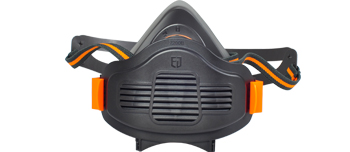
1、 On site simple qualitative inspection (must be done before wearing)
1. Negative pressure inspection method (most commonly used)
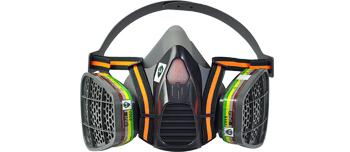
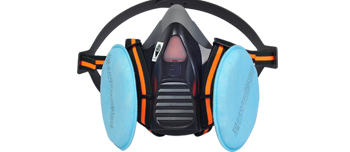
Wear a mask, adjust the headband tension, pinch the nose clip tightly, and ensure that the mask fully fits the face. Cover the air inlet of the filter cotton/filter box tightly with your palm, slowly inhale and hold for 5-10 seconds. If the mask slightly collapses inward and there is no cooling air flow or air leakage sound on the face, it indicates good sealing; If the mask rebounds quickly or has obvious air leakage, it is necessary to readjust the wearing position, tighten the headband, or change the size.
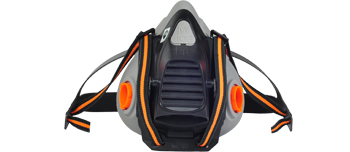
2. Positive pressure inspection method (focusing on exhalation valve and edge sealing)
After wearing a mask, cover the exhalation valve cover with your hand (a full face mask will block the air outlet) and exhale gently. If the mask bulges slightly and there is no airflow leakage at the edge of the face or the exhalation valve, it indicates that the sealing is qualified; If gas overflows from the edge or valve port, check if the exhalation valve is damaged and if the headband is too loose.
3. Sensory assisted examination method
After wearing it, perform movements such as turning your head, lowering your head, speaking, and taking deep breaths to feel if there is any air leakage on your face; You can also lightly apply a small amount of non irritating lubricant on the edge of the mask, observe whether there are bubbles generated, and assist in identifying small leakage points.
2、 Professional quantitative testing (compliance and adaptability verification)
1. Total leakage rate test (core standard method)
According to standards such as GB 2626-2019, use a tightness tester (such as an aerosol detector) to generate stable particulate matter in the testing environment. The wearer completes prescribed actions such as turning their head, speaking, bending over, and taking deep breaths, and the instrument synchronously measures the concentration of particulate matter inside and outside the mask to calculate the total leakage rate. Half face mask with a total leakage rate of ≤ 8% and full face mask with a leakage rate of ≤ 0.05% are considered qualified. This method can accurately quantify the sealing effect and is suitable for pre job adaptation testing and regular sampling.
2. 3D head simulator testing
Using silicone material ergonomic head models, different face shapes and wearing postures are simulated. Through pressure sensors and airflow analysis, the leakage distribution of masks under static and dynamic conditions is detected, and the adaptability of masks to different face shapes is evaluated. It is commonly used in product development and quality control.
3. Negative pressure space testing method
Create a controllable negative pressure environment in a closed test chamber, cut off the intake passage of the mask, measure the pressure changes and leakage inside the mask, determine the integrity of the seal, and apply it to precision testing of high-end protective equipment such as full face masks.
3、 Inspection precautions
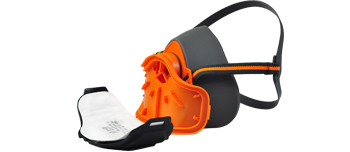
Shave your facial beard before wearing, as hair can damage the seal; The headband should be evenly stressed to avoid being too tight or too loose.
Simple inspection needs to be performed before each wearing; Quantitative testing is recommended to be conducted every six months or when changing mask models to ensure compatibility.
If the mask still cannot pass the inspection after multiple adjustments, it is necessary to change the size or model of the mask to avoid ineffective protection. Tightness is the "lifeline" of industrial dust masks. Only by ensuring sealing through scientific inspection can we truly resist dust hazards and protect the respiratory health of workers.