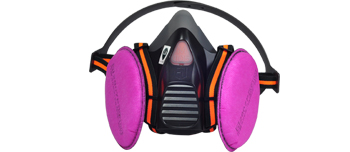
English

The air is filled with various particulate pollutants - welding fumes, fiberglass, dust, as well as PM10, PM2.5, and even the most difficult to filter PM0.3. Faced with these complex pollutants, KP100 level protection technology achieves a filtration efficiency of no less than 99.97% through a multi-layer collaborative filtration mechanism, while maintaining low respiratory resistance.
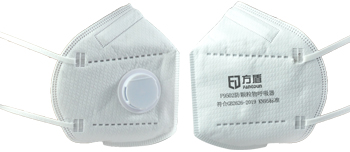
The core of KP100 protection lies in the division of labor and cooperation of the three-layer structure.
First layer: Non woven fabric - blocks coarse particles
The outermost non-woven fabric forms the first line of defense. Macroscopic pollutants such as dust and fiber debris with larger particle sizes in the air are initially intercepted here. This not only prevents coarse particles from entering the deep filtration system, but also extends the service life of the overall protective structure.
Second layer: fine fiber outer layer - filtering fine particulate matter
This layer targets fine particulate matter such as PM10 and PM2.5. Through the physical interception and inertial collision mechanism between fibers, fine particles suspended in the air are effectively captured. The optimized fiber arrangement improves filtration efficiency without significantly increasing respiratory resistance.
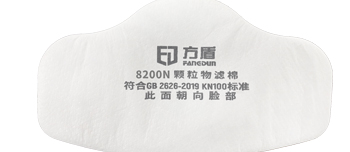
Third layer: electrostatic adsorption inner layer - capturing PM0.3 particles
This is the key to achieving ultra-high filtration efficiency. Using an electrostatic adsorption layer made of an polarizable material, a persistent electrostatic field is formed on the surface of the fiber. When the most penetrating ultrafine particles such as PM0.3 pass by, electrostatic forces actively capture them. The reason why PM0.3 is the most difficult to filter is that it is neither easily intercepted by inertial impact like large particles, nor easily captured by Brownian motion like smaller particles. The electrostatic adsorption technology precisely solves this problem, greatly improving the capture efficiency of PM0.3.
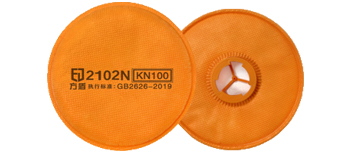
The three layers are not simply stacked, but work together in coordination: the outer coarse filter, the middle fine filter, and the inner electrostatic adsorption, each performing their own duties and complementing each other. More importantly, electrostatic adsorption avoids relying solely on physical weaving to intercept ultrafine particles - air molecules can pass smoothly, while solid particles are difficult to escape. This enables KP100 to achieve extremely low respiratory resistance while maintaining efficient filtration.
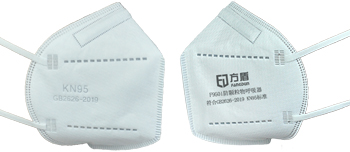
Based on this precise layer by layer filtration mechanism, KP100 level protection not only efficiently filters non oily particles such as dust and welding fumes, but also has excellent protection capabilities against oily particles. From coarse particles to PM0.3, from non oily to oily particles, this technology builds a reliable and comfortable respiratory safety barrier for users.