English
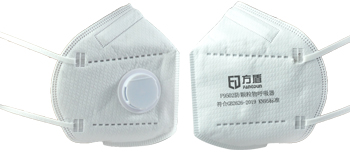
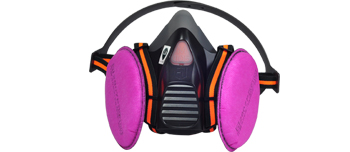
Many people only recognize KN100 when buying masks, thinking that the higher the level, the safer it is, but they overlook the key details. In fact, the core protective force of masks comes from the electrostatic adsorption effect of meltblown fabric, rather than simply the level. China's GB2626-2019 national standard specifies the technical requirements for protective masks, and blindly following the trend can easily lead to pitfalls. Here are 6 common misconceptions: stepping on one is equivalent to wearing it for nothing. At the same time, share practical mask knowledge to help you choose the right and use it correctly.
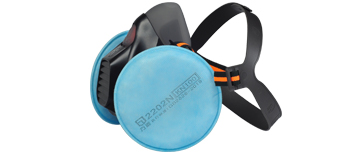
1、 Blindly pursuing higher levels, regardless of the protection level of the mask in the scene (KN90, KN95, KN100), represents the filtration efficiency of non oily particles, with KN100 having a filtration efficiency of 99.97%, but also the highest respiratory resistance. The core filter layer of a mask is meltblown fabric, with a fiber diameter of only 0.5-10 microns, which captures small particles through electrostatic adsorption. The higher the level of protection, the more suitable it is for all scenarios. KN95 can meet the needs of low-risk scenarios such as daily commuting and office work; Only high concentration dust operations such as mining require KN100. Blindly choosing the highest grade may lead to frequent removal and wearing due to suffocation, which may actually reduce the protective effect.
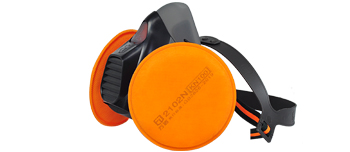
2、 One of the core requirements of the GB2626-2019 national standard is to only consider the filtration rate and not the sealing performance of the mask. The protective effect of the mask equals the filtration efficiency multiplied by the sealing degree. Even the highest level of masks, if there is a gap between them and the face, pollutants will directly enter the respiratory tract. The actual protective effect of KN100 with poor adhesion is far inferior to that of KN95 with good adhesion. When wearing correctly, it is necessary to press the nose clip with both hands to fit the bridge of the nose, pull the mask up to the chin, and ensure that there is no air leakage at the edges. This is a key step that many people easily overlook.
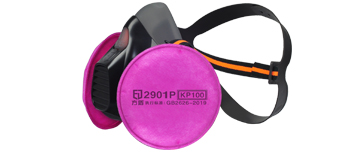
3、 Confusing KN and KP, the national standard for error prevention of particulate matter divides particulate matter masks into two categories: KN and KP, which have completely different applicable scenarios. KN class (including KN100) only filters non oily particles such as coal dust and pollen; Oil pollution such as oil fumes and paint mist requires the selection of KP series. Many people mistakenly believe that KN100 is omnipotent, but they do not know that it is powerless against oily particles. Choosing the wrong category is equivalent to missing a critical line of defense.
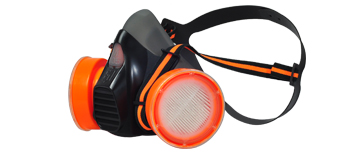
4、 Superstition for multi-layer thickening, treating thickness as the protective power of a mask depends on the quality of the meltblown fabric and the polarizing treatment, rather than the number of layers or thickness. High quality masks often have a three-layer SMS structure (spunbond layer+meltblown layer+spunbond layer), with an outer layer that blocks water, an inner layer that absorbs water, and a middle layer that filters. Excessive stacking of layers will only increase respiratory resistance, and poor quality thick masks may even be filled with non meltblown fabric, which actually reduces protection.
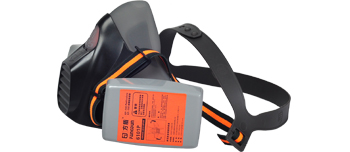
5、 Ignoring national standard certification, buying low-priced and low-quality regular protective masks must be labeled with GB2626-2019 national standard and have LA labor safety certification. Poor quality KN100 often lacks polar treatment, the filtration effect of meltblown fabric does not meet the standard, and even uses harmful dyes to dye, which destroys the electrostatic adsorption capacity. Long term wearing of such masks not only fails to provide protection, but may also pose a threat to health.
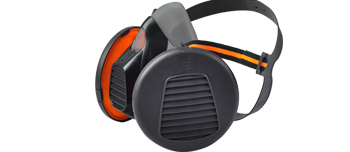
6、 Incorrect use can greatly reduce the protection. The static layer of the meltblown fabric will become ineffective when exposed to water and high temperatures. Therefore, protective masks such as KN100 should not be washed with water or exposed to direct sunlight; When it is damp, deformed, or has an odor, it should be replaced immediately. It is generally recommended to replace it every 4-8 hours. After removal, fold it in half with the inside facing inward and store it in a sealed bag. Do not place it randomly to contaminate or fold it up to avoid damaging the seal.
Fangdun Mask Reminder: The core of choosing a mask is to adapt to the scene, identify the national standard, ensure a tight fit, and use it correctly. Mastering basic knowledge points such as meltblown fabric and national standard classification, and avoiding these six pitfalls, is essential for masks to truly play a protective role and ensure respiratory safety.