English

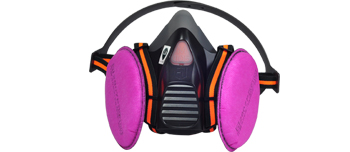
Dust pollution has always been an important factor threatening the health of workers in industrial production, construction, mining, and home decoration environments. Long term exposure to high concentration dust environments may cause irreversible respiratory diseases such as pneumoconiosis and chronic bronchitis. Among numerous protective equipment, half face dust masks have become the core equipment for personal respiratory protection due to their excellent sealing, filtration efficiency, and wearing comfort.
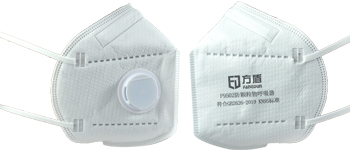
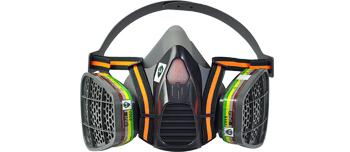
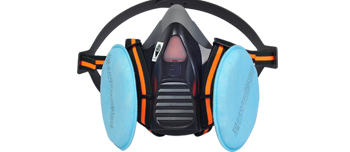
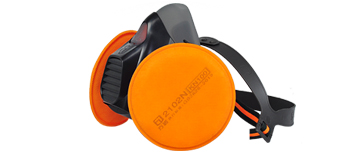
The Fangdun half face dust mask is designed to cover the mouth, nose, and lower jaw areas. The main body is usually made of food grade soft silicone material, which can tightly fit different face shapes and reduce the risk of leakage. Compared with disposable masks, its core advantage lies in the replaceable filter element - combined with different grades of filter cotton through threaded or snap on structures to achieve graded protection. This modular design not only reduces long-term usage costs, but also enhances protection flexibility.
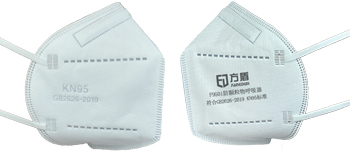
The filtration efficiency is the core indicator for measuring the performance of dust masks. According to the national standard GB 2626-2019 "Respiratory Protection Self priming Filter Anti Particle Respirators", dust masks are divided into three levels: KN90, KN95, and KN100, corresponding to filtration efficiencies of not less than 90%, 95%, and 99.97%, respectively. For ultrafine particles such as silica dust, coal dust, and cement dust, KN100 grade should be selected. Filter materials are mostly multi-layer composite structures, including electrostatic adsorption layer, meltblown fabric layer, and support layer, which capture submicron particles through mechanisms such as inertial collision, interception, diffusion, and electrostatic adsorption.
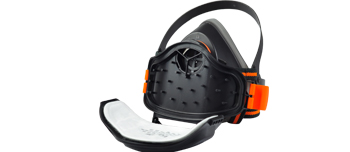
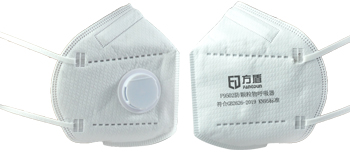
The correct wearing method is a prerequisite for maximizing protective effectiveness. Firstly, the integrity of the face mask should be checked to ensure good elasticity of the headband and no deformation or damage to the exhalation valve plate. When wearing, cover the face mask over the mouth and nose, fix the lower headband on the neck, and place the upper headband on the top of the head. Then adjust the metal nose clip or shaping strip to make the tight fit area conform to the cheekbone and jawline curve. Finally, it is necessary to perform an air tightness check: block the air inlet with your palm and inhale. If the mask collapses significantly and there is no air leakage, it indicates good sealing. It must be emphasized that beards, scars, or facial bone deformities can seriously affect the sealing effect.
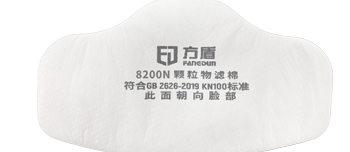
Daily maintenance cannot be ignored either. After use, use a soft cloth to wipe the inner and outer surfaces of the mask to avoid washing the filter cotton with water. The exhalation valve plate and headband are vulnerable parts that need to be regularly inspected and replaced. When there is a significant increase in respiratory resistance or when the appearance of the filter cotton is dirty, it indicates that the filter cotton has reached its saturation adsorption capacity and needs to be replaced in a timely manner. Generally speaking, in environments with moderate dust concentration, the continuous use time of KN95 grade filter cotton is about 40 to 60 hours.
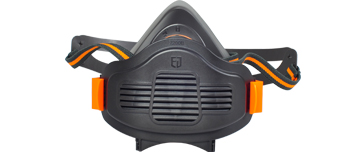
In the long run, the Fangdun half face dust mask is not only a labor protection product, but also an active management of life and health. It represents a shift in mindset from passive response to active protection. Only by choosing the appropriate level of protection, mastering the correct usage methods, and establishing standardized maintenance habits can dust hazards be truly minimized. Every correct wearing is a long-term investment in lung function.