English

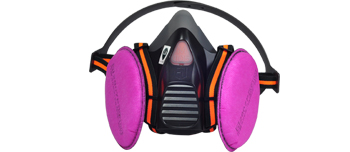
In the era of frequent public health incidents, high protection masks have become an important protective equipment in people's daily lives. However, what truly determines the protective performance of a mask is not the thickness of its appearance, but a series of cutting-edge technologies hidden in the fiber layer.
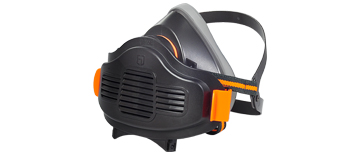
Filtering efficiency: a scientific game of multi-layer structure
The core of high protection masks lies in their precise filtering mechanism. The seemingly ordinary non-woven fabric layer is actually composed of polypropylene fibers with a diameter of only micrometers. These fibers are not simply stacked, but formed into a three-dimensional mesh structure through melt blown technology. When particulate matter in the air passes through, four physical effects work simultaneously: inertial collision, interception, diffusion, and electrostatic adsorption.
Among them, inertial collisions mainly intercept coarse particles larger than 1 micron, while fine particles smaller than 0.3 microns rely on Brownian motion to contact fibers. The most crucial trump card is electrostatic polarization technology - through the corona discharge process, the meltblown fibers are charged with persistent static electricity, forming a strong electrostatic adsorption field. This technology can improve the filtering efficiency from less than 30% based solely on physical interception to over 95%.
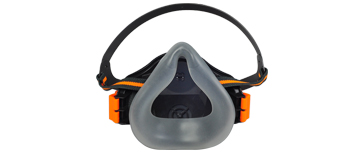
Electrostatic polarization: an invisible 'charge trap'
The breakthrough of electrostatic polarization technology is a watershed for high protective masks to move from "ordinary" to "efficient". Researchers have formed high-density charge traps on the surface of fibers by adding stationary mother particles such as tourmaline and silica. These charges can capture positively or negatively charged particles like magnets, including virus aerosols, bacteria, pollen, and PM2.5. It is amazing that the specially treated electret material has a charge half-life of several years, ensuring that the mask maintains stable filtration performance throughout its storage period.
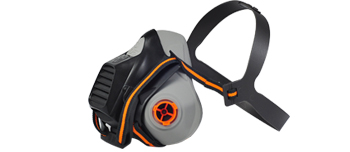
Tightness: The Neglected Lifeline
Even if the filtration efficiency reaches 99%, if there are leakage points between the mask and the face, the protective effect will be reduced to zero. Another core technology of high protection masks is facial engineering design. By using plastic nose bridge strips, three-dimensional cutting structures, and wide ear bands, a negative pressure sealing area is formed between the mask and the face. The total leakage rate test specified in national standards simulates the dynamic sealing ability in real wearing scenarios. A qualified high protection mask must have a total leakage rate controlled below 8%.
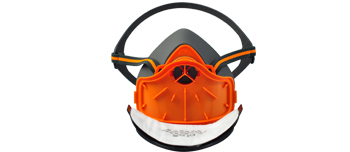
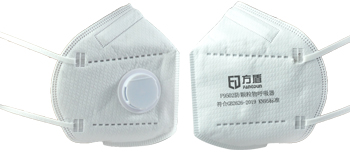
From nanoscale regulation of meltblown fibers, to molecular engineering of electrostatic charges, and to precise design of tight structures, every layer of Fangdun's high protection mask embodies the wisdom of materials science and fluid mechanics. These invisible hardcore technologies are the true code that safeguards respiratory safety.