English
Steel, the pillar supporting the national economy, has undergone a winding and tortuous path from raw material processing to finished product production, with each step embodying hard work and wisdom. In this long river of industry, raw material processing, sintering, ironmaking, steelmaking, and steel rolling are interconnected, yet also accompanied by the swirling of dust. These tiny particles, like ghosts lurking in the industrial empire, wander in the atmosphere, polluting the environment, eroding health, and even potentially causing safety hazards and shortening equipment lifespan.
At the moment of crushing, screening, and transferring, ore and coke will generate dust that is homologous to the original materials. These coarse dust particles, with a particle size up to hundreds of micrometers, resemble scattered sand grains, dancing in the wind in areas such as raw material yards and crushing workshops, forming a dusty sky that taints the tranquility of the factory area and its surroundings with dust.
High-temperature smelting furnaces, converters, and electric furnaces are the crucibles of steel. However, during chemical reactions such as sublimation and oxidation of materials, fine dust is generated. These dust particles, like an invisible poison arrow, are extremely fine in size and can remain suspended in the air for extended periods. Some can even penetrate the pulmonary alveoli, planting health hazards deep within the human body. For instance, during the charging and tapping processes in converter steelmaking, the temperature of high-temperature dust can reach 1200℃, carrying harmful components such as FeO and SiO₂. The dust concentration is so high that it resembles a raging undercurrent.
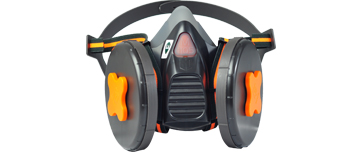
During the heating, rolling, and cutting processes of steel billets, iron oxide dust condenses with metal vapor to form fine dust; surface treatment processes such as acid pickling and grinding of steel also continuously generate dust containing metal impurities. These dust particles are highly viscous, adhering to equipment and the working environment like stubborn marks, difficult to remove, thus causing secondary pollution.
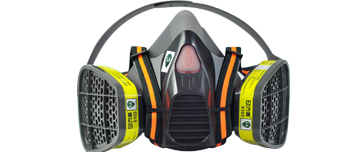
Dust, like the shadow of industry, poses a significant threat to human health that cannot be overlooked. Large particles of dust act as invisible barriers, blocking the respiratory mucosa such as the nasal cavity and throat, leading to conditions like rhinitis and pharyngitis. On the other hand, fine dust particles are like stealth assassins, penetrating deep into the pulmonary alveoli. Prolonged inhalation may result in lung tissue fibrosis, triggering pneumoconiosis, and even bronchial asthma, emphysema, and lung cancer. The adsorptive properties of metal oxide dust are akin to a magnet, attracting harmful gases like CO and SO₂, thereby increasing the risk of poisoning. When dust enters the eyes, it acts like a sharp blade, irritating the conjunctiva and elevating the risk of eye diseases such as conjunctivitis.
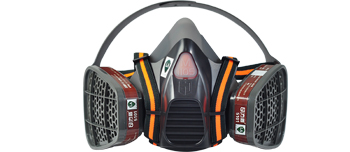
The prevention and control of dust pollution in steel production is a systematic project that requires the dual forces of technological innovation and management optimization. Only through the full-chain measures of source reduction, process interception, and end-of-pipe treatment can efficient dust control be achieved. With the leapfrog development of intelligent and green technologies, intelligent dust removal systems integrating AI visual recognition and efficient resource recovery technologies will shine in the steel industry, helping steel enterprises transform from "industrial rust belts" to "ecological show belts". Only by integrating dust protection into every link of production can we truly safeguard the health of employees, protect the ecological environment, and achieve high-quality and sustainable development in the steel industry.